What is Tungsten Heavy Alloy
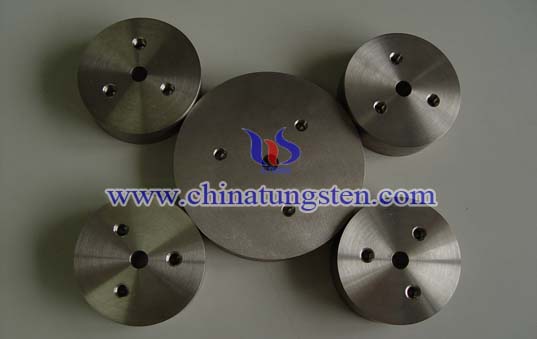
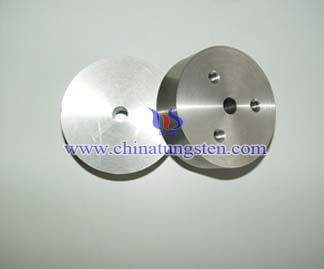
Tungsten heavy alloys (WHAs) are ideally suited to a wide range of density applications, offering a density approaching that of pure tungsten but without the very costly processing and inherent size and shape limitations of the former.
WHAs are produced by a powder metallurgy (P/M) technique known as liquid phase sintering (LPS), in which completely dense, fully alloyed parts are formed from pressed metal powders at a temperature less than half the melting point of pure tungsten.
While sintered steel and copper alloy parts commonly contain significant residual porosity that may require polymeric infiltrants to seal, sintered tungsten heavy alloy have a nonporous surface.
Tungsten heavy alloy parts are manufactured from very fine, high purity metal powders – typically tungsten, nickel, and iron. The blended metal powder is compacted under high pressure (up to 30 ksi) to form a specific shape that is very close to the geometry of the final part.
By utilizing this near net shape forming approach, economy is realized by the elimination of excess material and the time and energy necessary to remove unwanted stock from mill shapes. Pressed parts are then subjected to high temperature sintering in hydrogen. As the parts are slowly heated, the hydrogen reduces metal oxides present and provides a clean, active surface on each of the very small metal particles.
As temperature increases further, chemical diffusion takes place between particles. Neck growth occurs between particles, and surface energy drives pore elimination and part densification. The pressed part shrinks uniformly, with about 20% linear shrinkage (equating to approximately 50% volumetric shrinkage) being typical. Once the temperature is sufficiently high to form the liquid phase, any remaining densification occurs very quickly as the alloy assumes a "spheroidized" microstructure by a mechanism know as Ostwald Ripening. The sintered structure of a common commercial tungsten heavy alloy two-phase, consisting of a linked network of tungsten spheroids contained in the ductile matrix phase.
Related Products: